School Social Media Culture: Show More Than the Highlight Reel
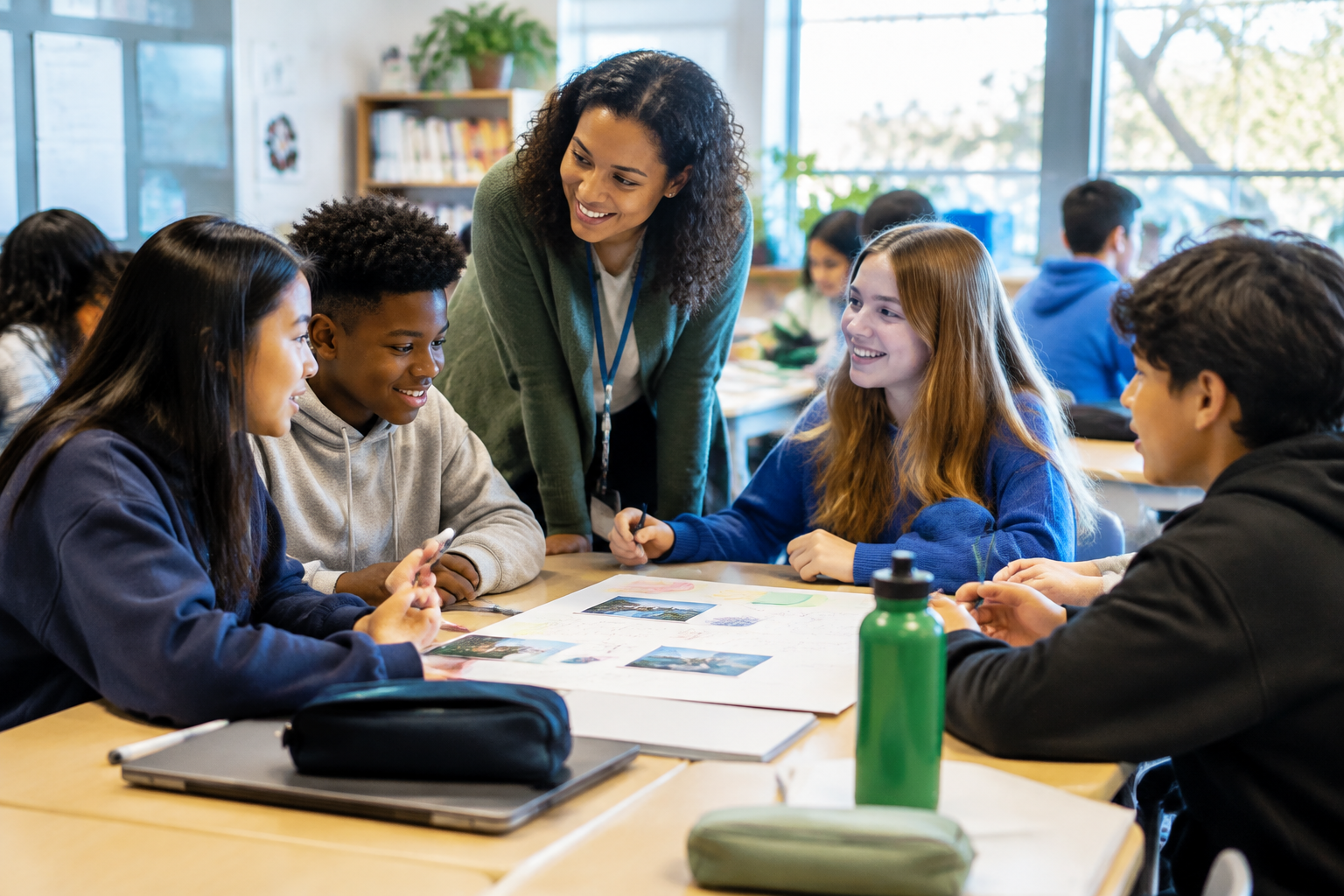
A practical framework for representing everyday school life online with student agency, context, consent, and a wider range of voices.
A school’s social media can show a packed auditorium, a championship celebration, or a colorful cultural event. Those moments can matter. But if they are almost the only moments people see, a school’s online presence may feel more like a highlight reel than a portrait of daily life.
For families considering a school, students deciding whether they feel they belong, and staff explaining what makes their community distinctive, the question is not simply, “What can we post?” It is also, “What does this post help someone understand—and whose experience does it represent?”
A thoughtful approach to school social media culture brings big events into view without making them stand in for everything. It gives context to student agency, cultural celebrations, and school policies; respects consent; and makes room for perspectives beyond the most visible or camera-ready people.
What a highlight reel can—and cannot—show
Highlights are useful. A performance, science fair, student project, or community celebration can give viewers a glimpse of energy and achievement. These posts may also help families recognize activities and traditions they care about.
The limitation is representativeness. A few polished images cannot, by themselves, explain how students experience an ordinary Tuesday, how adults support learning, or how a school responds when people disagree. Frequent event coverage can create an impression of what the school values, even if that impression was not the communications team’s intention.
That does not mean every post needs to explain an entire institution. It means each post should make a modest, accurate claim. A photo of a robotics demonstration can show students presenting a project. It cannot establish that every student gets equal access to robotics. A cultural event can document a celebration. It should not be framed as proof that the school has resolved every question of belonging or representation.
Practical test: If a viewer saw only this post, what might they reasonably infer? Is that inference fair? Add a sentence of context, or narrow the caption’s claim, when needed.
Treat news coverage as a prompt, not a playbook
Stories in the news about student agency, cultural events, or phone restrictions can prompt useful questions for school communicators. They can encourage teams to consider how students participate in decisions, how traditions are described, or how a device policy is explained to families.
But a news example is not evidence that a particular posting style changes school culture. A story about a school’s policy or event cannot tell another school what its own students experience, and a social post cannot substitute for listening, policy work, or ongoing relationships. Use coverage to generate questions—not to borrow a conclusion or claim a communications tactic caused a cultural outcome.
For example, a phone-restriction story might prompt a school to ask: How do we explain the policy’s purpose? What questions do students and caregivers have? Where can people find the full policy? The post should describe the school’s own rules accurately, link to the authoritative information where appropriate, and avoid implying that a restriction alone demonstrates a particular culture.
Similarly, a story about student leadership may prompt a team to examine where student perspectives appear in its own channels. The useful follow-up is local: Who was invited to contribute? What choices did students actually make? How will the school represent disagreement or limitations honestly?
Build a fuller picture of ordinary school life
A credible feed does not need to document every classroom or publish on a rigid quota. It does benefit from deliberate variety. Consider planning for different kinds of evidence about daily life, rather than treating the school calendar as the whole story.
Show the process, not only the result
A finished mural or award is a clear visual. The steps behind it may reveal more: students developing ideas, revising work, asking questions, or describing what they learned. With appropriate permission, a short student explanation can add detail that a posed group photograph cannot.
Keep the description specific. “Students tested several designs before presenting their final model” says what happened. “Our students are all future engineers” turns one activity into a sweeping claim about a group.
Make learning visible without staging it
Classroom content can be informative when it protects student privacy and does not interrupt instruction for the sake of a post. A teacher’s explanation of a lesson, a sample of student work shared with permission, or a brief reflection on a learning goal can provide useful context without implying that a single classroom represents every student’s experience.
Ask educators what viewers would need to know to understand the example. Is the work a draft or final product? Was it completed individually or collaboratively? Is there a relevant accessibility or language context? A few accurate details can make a post more meaningful than a generic praise caption.
Include the people and routines that keep school moving
Daily culture also involves transitions, support, collaboration, and care. Depending on the school and its privacy practices, stories might feature a librarian recommending a book, a counselor explaining how families can find support, or staff preparing materials for a program. These examples broaden the picture without asking students to disclose personal circumstances.
Do not turn routine visibility into an obligation for staff or students. Participation should be voluntary and planned, with clear expectations about where and how content may appear.
Represent cultural events with context and care
A cultural celebration can be joyful and worth sharing. Careful coverage helps ensure that a complex community is not reduced to costumes, food, music, or a single day on the calendar.
Before publishing, consider:
- **Who shaped the event?** Credit organizers and contributors where appropriate, and do not imply that one participant speaks for an entire community.
- **What context would help?** Name the event accurately, explain its significance only when that information has been confirmed, and avoid flattening distinct traditions into a generic label.
- **Who is visible?** Consider whether the same students are repeatedly photographed as representatives of a group, and whether the story includes varied roles and perspectives.
- **What is not being shown?** A celebration post is one moment, not a complete measure of inclusion. Avoid using it to make broader claims about belonging without other evidence.
- **How can people correct or contribute?** Provide a respectful route for participants to share corrections, preferences, or concerns.
When a school does not have enough context to describe a tradition accurately, it can ask contributors how they would like the event named—or keep the caption limited to verified details. Restraint is preferable to filling gaps with assumptions.
Give student agency real shape
Student voice is more than putting a student in front of a camera or asking for a quote after decisions have already been made. Agency involves meaningful choices within clear boundaries: what to discuss, how to be identified, whether to participate, and where the content may appear.
A simple creator workflow can help. Explain the purpose of the content, offer a choice of formats, agree on the caption and attribution, and let the student know what approval steps remain. If an adult edits a student’s words for length or clarity, preserve their intended meaning and make the change transparent when appropriate.
Students should not be expected to disclose sensitive experiences to make a story compelling. Nor should a student’s participation be treated as evidence that all students agree with a policy, event, or school message. Invite perspectives thoughtfully, including disagreement when the situation calls for it, and protect students from pressure to speak on behalf of others.
Make consent and privacy part of the workflow
Consent is not a last-minute checkbox. It is a practical safeguard that should shape planning, capture, editing, and publication. Follow the school’s applicable policies and procedures, verify permissions before using identifiable student content, and respect a family’s or student’s stated preferences. Requirements vary by school and situation, so communications teams should consult the appropriate school leader or privacy contact rather than relying on a social media checklist as legal advice.
A workable review process can ask:
1. Is this person identifiable? Consider faces, names, uniforms, location details, student work, and other contextual clues.
2. Is there current permission for this use? Do not assume that permission for one channel, event, or purpose automatically covers another.
3. Does the content reveal more than intended? Check screens, documents, schedules, badges, and background conversations.
4. Can the person participate without being featured? Provide a genuine alternative where practical.
5. Who can address a concern after publication? Make responsibilities and escalation steps clear.
Consent safeguards are useful only when staff can follow them consistently. Keep the process understandable, train contributors, and create a route to pause publication when permission or context is uncertain.
Ask whose perspective is missing
A useful editorial review goes beyond checking spelling and image quality. Look across a planned series of posts and ask whose voices, roles, and experiences recur—and whose rarely appear.
This is not an invitation to label students or staff by identity in a spreadsheet. It is a prompt to examine patterns with care. Are stories disproportionately about competitive achievements? Do posts show students with different interests and ways of participating? Are family perspectives represented only at formal events? Do captions explain how to find information for families who may not already know the school’s routines?
Invite input from students, educators, and families through appropriate channels. Be clear about the question you are asking and what you can do with the feedback. Listening is not a promise to publish every suggestion, but it should be more than a symbolic request for approval after a story is finished.
Turn good intentions into a repeatable practice
A manageable editorial routine can help teams work consistently without making every post feel manufactured:
- **Set an editorial purpose.** Decide whether the post informs, celebrates, explains, invites participation, or documents learning.
- **Name the evidence.** Confirm what the image or story actually shows and what it does not establish.
- **Check permissions and context.** Verify consent, facts, names, and any policy details with the appropriate people.
- **Review representation.** Consider the feed as a whole, not just the individual post.
- **Make participation clear.** Tell contributors how content will be edited, approved, and used.
- **Learn from responses.** Note questions, corrections, and recurring information needs. Treat analytics as signals about communication activity, not proof that a post changed school culture.
For teams coordinating creators, approvals, and multiple channels, a shared workflow can make these steps easier to maintain. Onward Signal is a browser-first, AI-powered school social media and communication intelligence product designed by educators for educators. Its stated capabilities include student and staff creator workflows, role-based approvals, student media-consent safeguards, a Creative Studio, multi-school controls, publishing tools, a social inbox, analytics, enrollment attribution, templates, and Chromebook-friendly browser workflows. Those tools can support coordination; the school still supplies the judgment, local context, and relationships behind responsible storytelling.
Explore the [Onward Signal resources](/resources) for more guidance on school communications and social media planning.
Frequently asked questions
Should schools stop posting celebrations and awards?
No. Celebrations can be valuable parts of a school’s story. The goal is to provide a broader, more contextual picture over time and avoid presenting individual moments as evidence of the whole school experience.
How can we show school culture without photographing students?
Feature educators explaining a learning approach, student work shared with appropriate permission, school spaces without identifying details, event information, or routines and resources that help families understand how the school works. Choose formats that do not make a student’s image or personal story necessary.
Does a student quote count as student voice?
It can be one expression of student voice, but the presence of a quote alone does not establish meaningful agency or broad agreement. Consider who invited the student, what choices they had, how their words were edited, and whether the quote is being used to imply more than that student intended.
Can social media improve school culture?
A post can communicate information, invite participation, or make an aspect of school life more visible. It should not be treated as proof that culture has changed. Evaluate communication outcomes separately from deeper questions about student experience, belonging, or policy.
What should we do when consent or context is unclear?
Pause publication, verify the relevant permission and facts with the responsible people, and revise or choose a different story if uncertainty remains. A post is optional; protecting trust is not.
Sources & Further Reading
The supplied source links are Google News RSS redirects, and the underlying article titles and contents were not available in the provided material. They are included here as starting points for independent review, not as substantiation for claims in this article. News examples should be evaluated in their original context before being used in school communications planning.
- [Source 1 — Google News](https://news.google.com/rss/articles/CBMiswFBVV95cUxPWm5VNFFQaEkxaVJqNXIzZ19kcm0wQ2t6eEl0a0QtMkF0Yjd6OXZseGo4eURvcXZoMGIzUENRTjYySzd6bFVaSlc0cm01SmhiSHpfa1FLU0Y4THlLUXY3MjdYcDBjTDFvSGNZVFRud01xd1VvOUpIR1RsdkdxYjRrdVpyX3VQTkRUeThpR19renM2Vl9MNFhyU1JrTld3OEE0SVlFZWZkMnVIS2R2ZXFlRXMwVQ?oc=5)
- [Source 2 — Google News](https://news.google.com/rss/articles/CBMiuwFBVV95cUxOVFVnX1dNWnhVMVhGMGpzU0g5WHNBYjdhX1RWQnhZTGEzZXlzYXhOS0I0d2tDeHY4VkhjRmg2SnY0Nl94bXY4OGdBSExENTFGT1B5eDlxejZiNjhBMWJ0U2dyd3hoOV9Wb29laGNNX3lsbnlhVEQ1a2VaZmI4eURiUEJwNWYyelJ4enpMNHJzcVhJOXRKT0dSa1daa3RTWHotZkU0Ri1VbXVnOElEcmRPTnE5VUlzMFFHaXl3?oc=5)
- [Source 3 — Google News](https://news.google.com/rss/articles/CBMiqAFBVV95cUxQUnFDaHAzejl1WERLbHJlNl84clF5Y29zcmU0M0Rfb2hnaHVoOFkybDBBSmRJMy1pSk4xMldEUTE4WC1SWk96OHA0YVJsUEpyZC1YanNZd0hPUVVGQzY3MHZYSTF2Mm44S2tvaC1KTXk0bS1HUkpLenVJaFF4aXY5WWxVWlpfQVhkZzUxUEFrSkRTV1JfejJ4OUZ1MVY3WVd4a2dtQTRtNHU?oc=5)
- [Source 4 — Google News](https://news.google.com/rss/articles/CBMiW0FVX3lxTE9xa2FmdE13cWZmNTBGRDAwdk5VSFd1VTF6QWRiRXZQSTItX2VkTmp2R2xVNHJVX1pqazlZR21PRmJMbkRRWF90NE56VGhvQjRCOTZOZnZodWJJTjA?oc=5)
Make your school’s online story more useful and more representative. Explore [Onward Signal resources](/resources) or connect with the Onward Signal team to discuss workflows for school communications.
Turn school communication into a system—not another task list.
Build your School Brain, create governed campaigns and help your team tell the stories already happening every day.