How to Tell a School Story Without Exposing Student Information
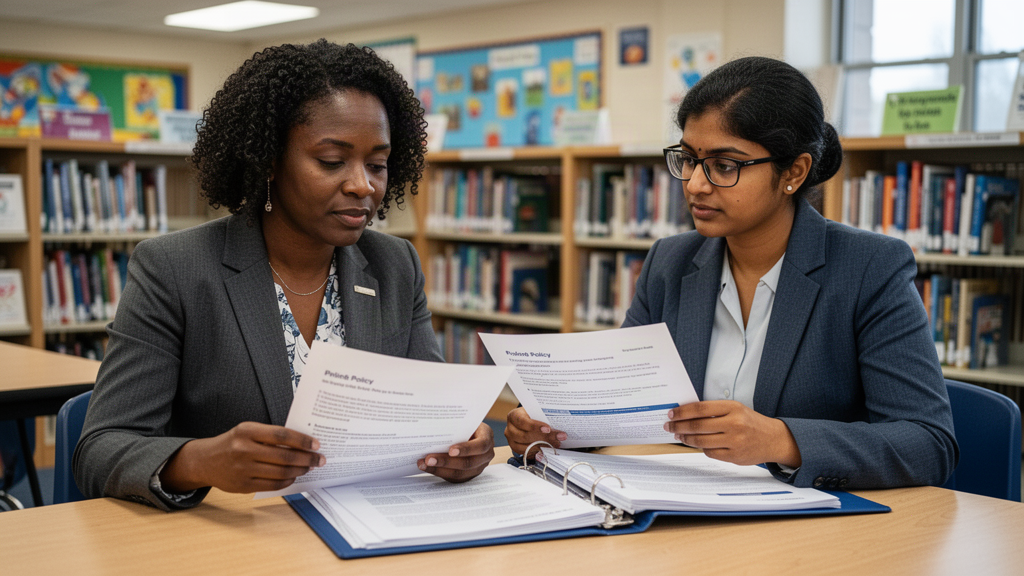
A compelling school story does not need a student’s name, face or personal circumstances to feel real. Use consent, context and less-identifiable alternatives to make thoughtful choices before a post goes live.
Start with the story, not the student
Before taking a photo or drafting a caption, write down what the school wants the audience to understand. Is the point to explain a classroom activity, celebrate a team effort, or invite families to an event? A clear purpose helps you decide what details are actually needed—and what might expose a student without adding meaning.
For example, a post about a science project can show a close-up of materials on a table, a display of student work with identifying details removed, or a teacher explaining the activity. It may not need a student’s face, full name, grade and classroom all together. Each extra detail can make a person easier to identify, especially within a small school community.
Try this test: If you remove the student’s name and face, can the audience still understand the story? If yes, begin with that less-identifying version. If not, be specific about why identification matters and who benefits from it. This small pause keeps the communication goal—not the convenience of a quick photo—at the center.
Treat consent as a conversation, not a checkbox
Follow your school or district’s established process for permissions, and ask the staff member responsible for privacy or communications when a situation is unclear. A permission record may be necessary, but it is not a substitute for thinking about the particular image, caption, audience and platform. A family’s earlier agreement may not answer every question about a new use.
Make the request understandable. Explain what you want to share, where it may appear, and whether the student will be named or otherwise identifiable. Give families a meaningful way to decline, and plan an alternative that does not single out a student for opting out. For instance, if a class is assembling a group photo, consider a wide shot from behind or a photo of the project rather than asking one student to stand apart.
Also consider the student’s perspective in an age-appropriate way. A student may not want a particular moment shared even when an adult has approved it. If the story involves a sensitive achievement, challenge or personal circumstance, choose a different story or tell it without identifying the student. Avoid treating a moving personal detail as automatically suitable for public communication.
Add context while removing identifying clues
A photo can reveal more than a face. Check the background for name tags, classroom rosters, screens, award certificates, location clues or other students. Captions can add identifying information too: a student’s name combined with a team, event, date or unusual accomplishment may narrow the audience’s guesswork.
Context can preserve the meaning without supplying those details. Instead of naming a student and describing an individual support plan, write about how the class practiced a skill together. Instead of identifying a student in a competition photo, describe the activity and what participants learned. Keep the language accurate and avoid implying that every student had the same experience.
Before sharing, ask a colleague who was not involved in creating the post to review both image and caption. Ask: What could someone infer from this? Does the post reveal something the school did not intend to share? Would the story still work with a tighter crop, a general description or no image at all? A second look is especially useful when several small details combine to identify someone.
Choose a useful alternative to an identifiable image
If a recognizable photo is unnecessary, choose a format that serves the same communication purpose. Options include a photograph of materials, a close-up of hands at work, a wide classroom scene without readable names, a staff member demonstrating an activity, an illustration, or a short description of what the group did. Check each alternative for indirect identifiers before using it.
For example, a school might want to show that students are preparing a garden. A picture of labeled seed packets could expose names; a wide image of planting tools and hands in the soil may tell the story with less personal information. A caption such as “Our classes are learning how plants grow” offers context without attaching an individual student’s identity to the post.
Do not assume that blurring or cropping solves every concern. A uniform, location marker, distinctive project or caption may still reveal who is pictured. If no safe, useful version is available, choose another story. A communications calendar can make that choice easier by keeping a supply of activities, staff perspectives and school-wide updates that do not depend on identifiable student images.
Use a review checklist—and choose the next step
Build a brief review into the normal communications routine. Decide who checks permissions and local guidance, who reviews the image and caption together, and who can pause publication when a detail is uncertain. Keep the process simple enough that staff can use it consistently; do not rely on memory or informal assumptions.
Before sharing, check:
- Is the purpose of the story clear, and is every identifying detail needed?
- Does the image or caption reveal names, locations, schedules or sensitive circumstances?
- Has the school followed its permission process for this specific use?
- Is there a respectful alternative for a student who should not be identified?
- Has another person reviewed the complete post in context?
For teams examining school communication and social media intelligence, Onward Signal’s [solutions](/solutions) and [resources](/resources) can be starting points for a broader discussion about responsible storytelling and review practices. The practical next action is to take one upcoming post and run it through the checklist with a colleague. If your team is assessing its communication approach, use a [demo](/demo) conversation to clarify your needs and questions—without assuming any particular workflow or feature is available.
Common questions
Is a student’s name the only detail that can identify them?
No. A face, uniform, location, event, date, distinctive accomplishment or combination of caption details may make a student recognizable. Review the image and wording together, including what the intended audience already knows.
What should we do if we are unsure whether a post is appropriate?
Pause it, consult the staff member responsible for communications or privacy, and consider a less-identifying image or a different story. Follow your school or district’s established process rather than relying on assumptions.
Turn school communication into a system—not another task list.
Build your School Brain, create governed campaigns and help your team tell the stories already happening every day.